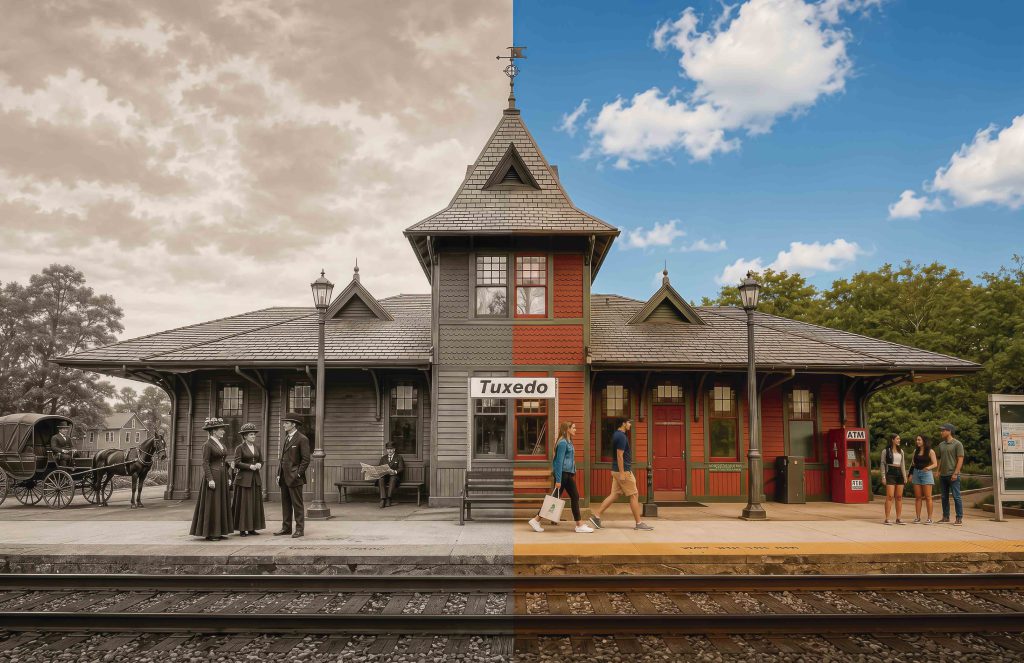
For decades, Tuxedo Reserve was a vision in search of a future. Now, after years of false starts, the plan once referred to as “Tuxedo Park 2” has been reimagined as an actual village.
At the groundbreaking in May 2025, the Tuxedo school choir sang the national anthem, while sixth-grader Elizabeth McElroy considered what it might mean to add a new community to a town whose entire population could fit comfortably inside a few Manhattan apartment towers.
“I think it would be good for civilization,” she told a News 12 reporter. Then she made the case in more practical terms: “More houses. More people. Hopefully more people in our school, because our school is tiny.”
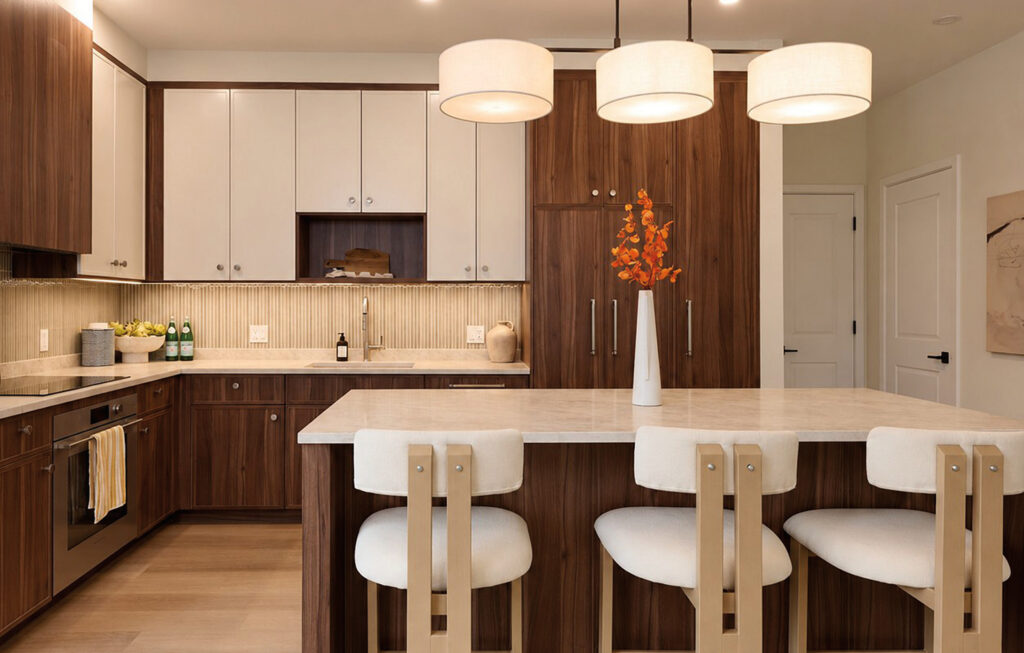
It was an unexpectedly perfect summary of what The Village at Tuxedo Reserve is trying to create. Not simply more houses and shops, but more people with whom to share a school, a concert lawn, a table, a trail, and the small rituals of everyday life that, over time, turn a collection of buildings into a community.
There is a particular kind of New York fantasy that begins somewhere around the George Washington Bridge. The traffic thins, the buildings recede, and a person who has spent 20 years measuring distance in subway stops begins to imagine another life: a house near the woods, perhaps, but not exile; a trail in the morning, a train to the city, and, at the end of the day, somewhere nearby to get a properly made drink.
Tuxedo specializes in this contradiction. Roughly 30 miles from Manhattan, it belongs to the Hudson Valley, with dark ridgelines, glacial lakes, old stone walls, and a protected forest. Together, Harriman State Park and Sterling Forest contain roughly 68,000 acres, with more than 200 miles of trails in Harriman alone. New York City is close enough to remain part of daily life, yet on the right stretch of road, it can seem almost surprising that it exists.
In a short documentary about the project, Greg Gushee, Executive Vice President at Related Companies, describes the ambition behind the project as taking “a lot of the great things about Manhattan… to the country.” The appeal is not scale or nightlife. It is proximity—the ordinary, urban convenience of walking somewhere and finding other people there.
That idea arrived late. More than 40 years ago, the land was acquired with a vision so grand that it was sometimes described as “Tuxedo Park 2.” The reference was to the famous “gated” village next door that was created in the 1880s as a country refuge for New York’s ruling class. The original plan followed a similar logic: large houses on large lots, a new private world spread across a beautiful landscape. Privacy was the amenity. Space was the point.

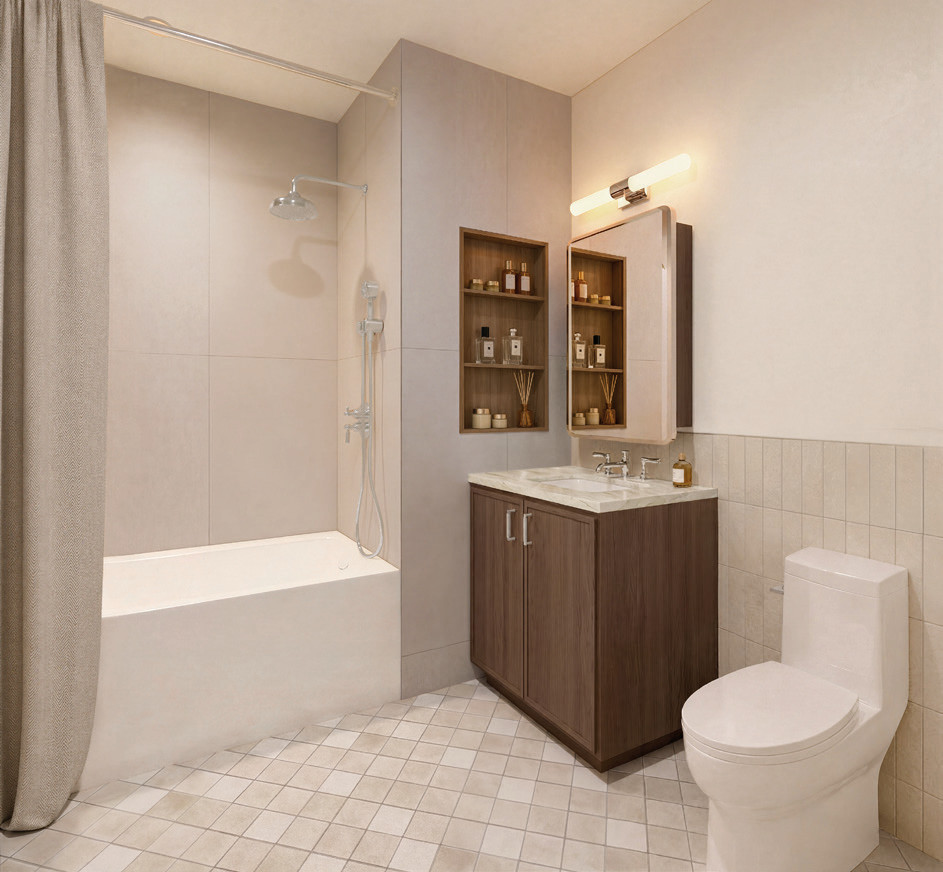
The decades that followed changed both the project and its relationship with the land. Plans were repeatedly revised as markets shifted and infrastructure questions accumulated. The footprint eventually tightened, and homes were clustered. The current permit requires more than 750 acres to be transferred with permanent conservation easements. The decisive reinvention came in 2022, when the town approved a plan for as many as 1,609 homes, including detached houses, duplexes, townhouses, and multifamily buildings. Instead of scattering estate houses across the property, the revised plan concentrates residents in distinct neighborhoods around a mixed-use center. Lennar is building the for-sale homes, while Related is developing the apartments, stores, restaurants, and gathering spaces. The finished development is expected to bring roughly 5,000 residents and hundreds of schoolchildren over the next decade, along with a $2.5 million contribution to the school district.
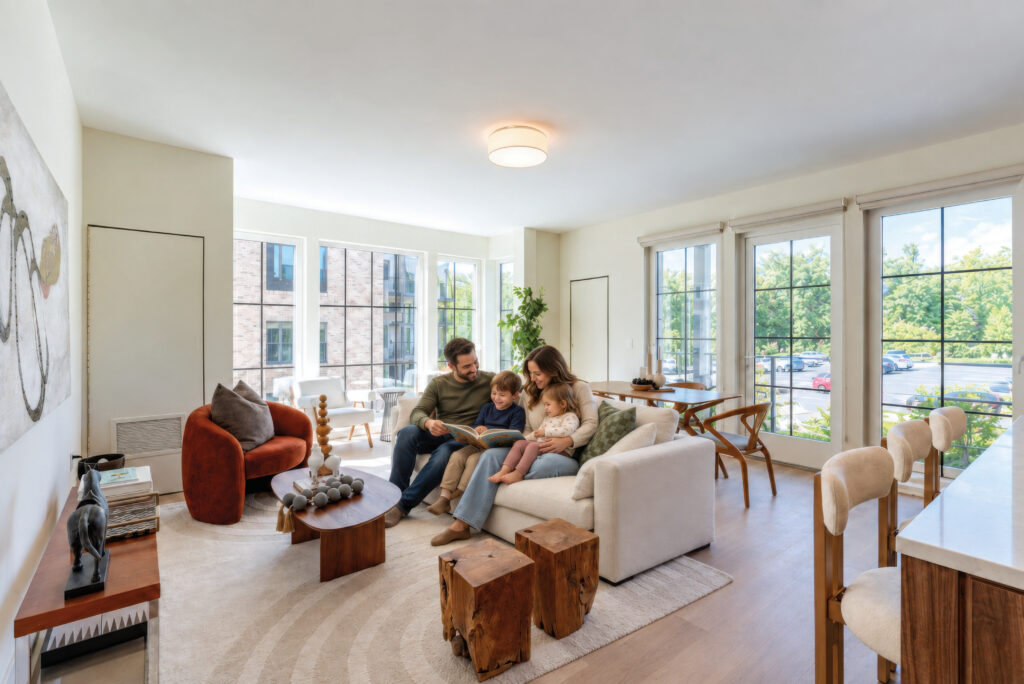
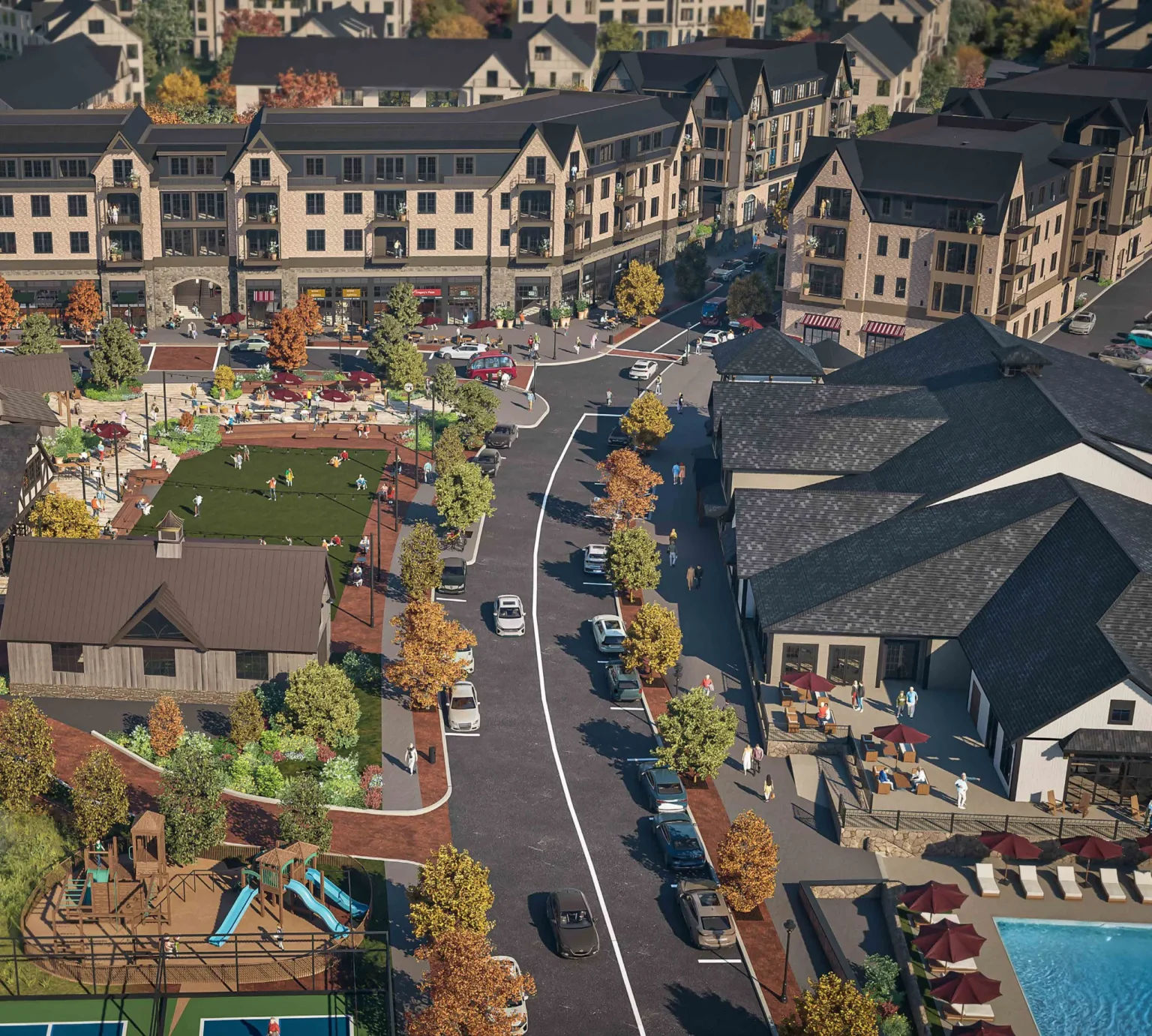
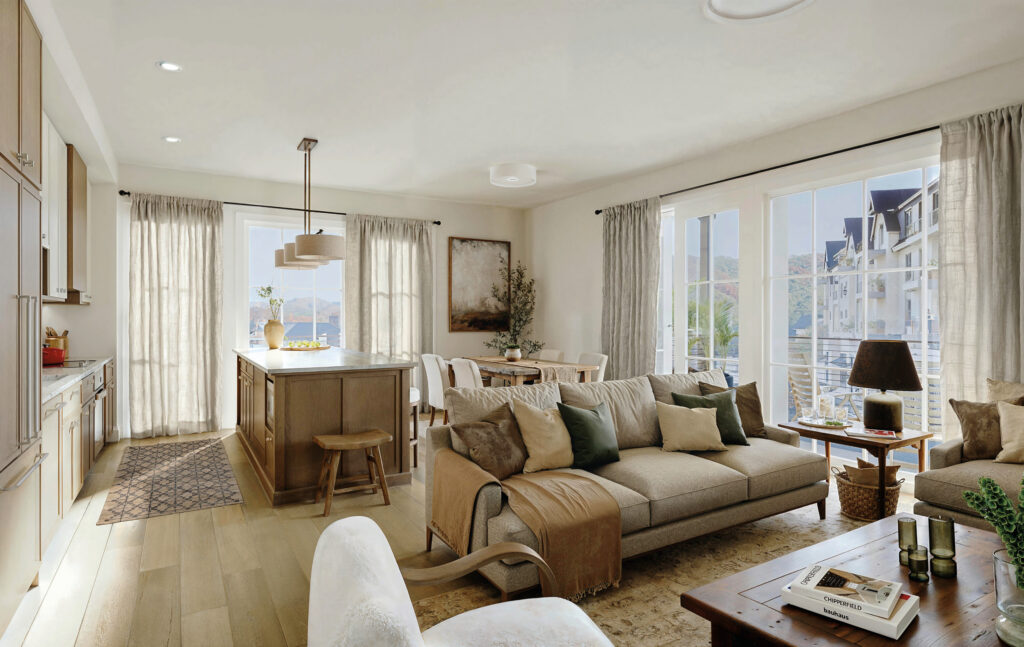
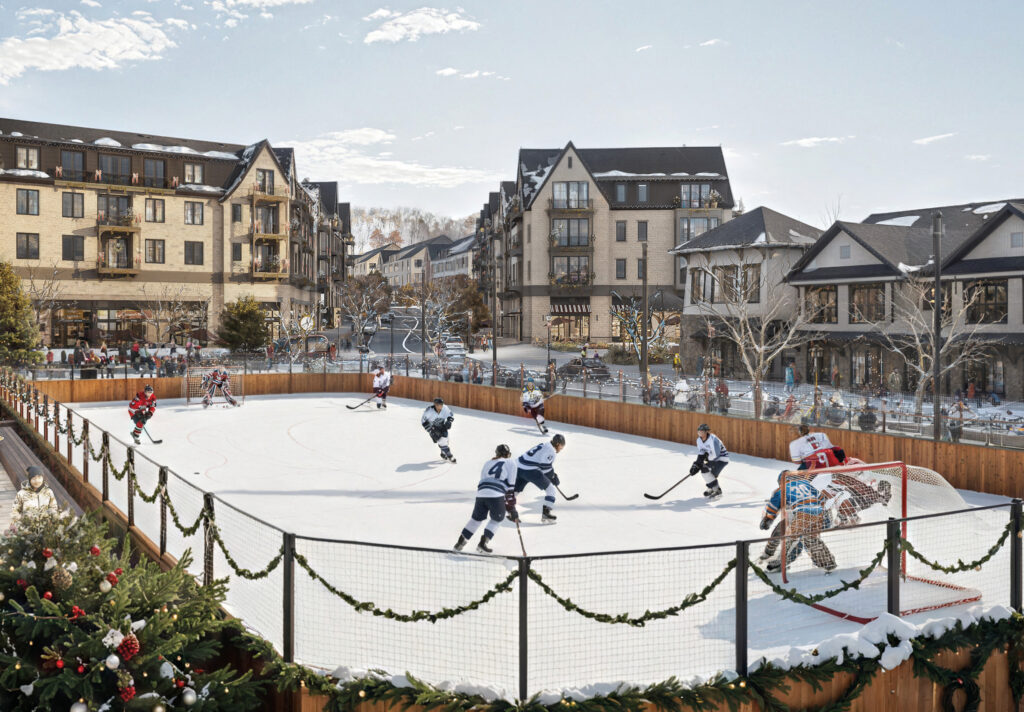
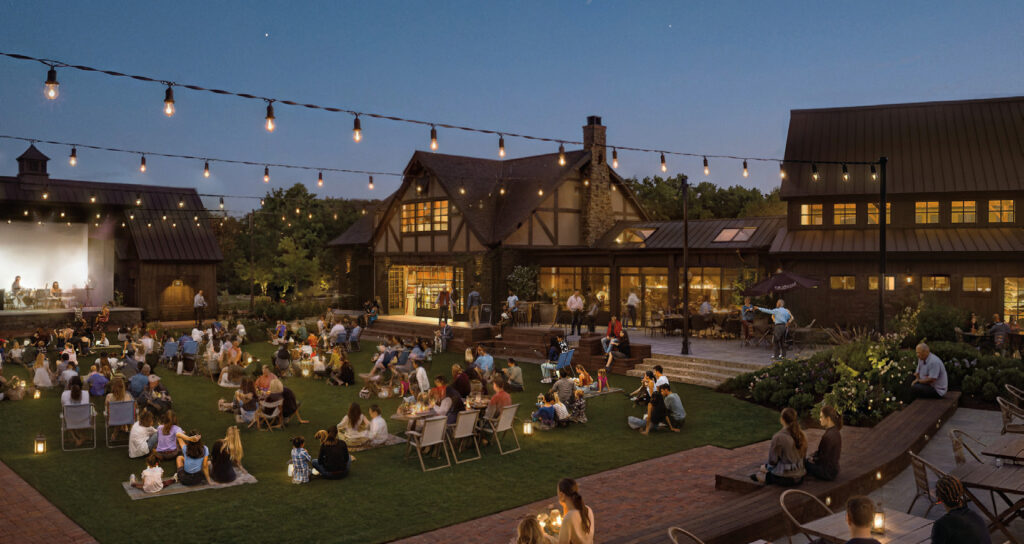
At the center, more than 300 apartments will frame the institutions of village life. The timber-frame Barn Market will house a grocery store, filling a genuine need in an area where the nearest alternative is more than 15 minutes away. Across the way, a public green faces a Stage House for performances and screenings. There is a fitness and amenity building, an ice rink, and architecture that borrows from Tuxedo’s Tudor vocabulary while keeping the interiors contemporary.
The retail mix is intended to be useful as well as enticing. There is a diner, a restaurant and bar, a salon, a barbershop, a preschool, and regional operators rather than national chains. The audience extends beyond residents to longtime Tuxedo locals, commuters, families from Northern New Jersey, hikers coming out of Harriman, and visitors passing through.
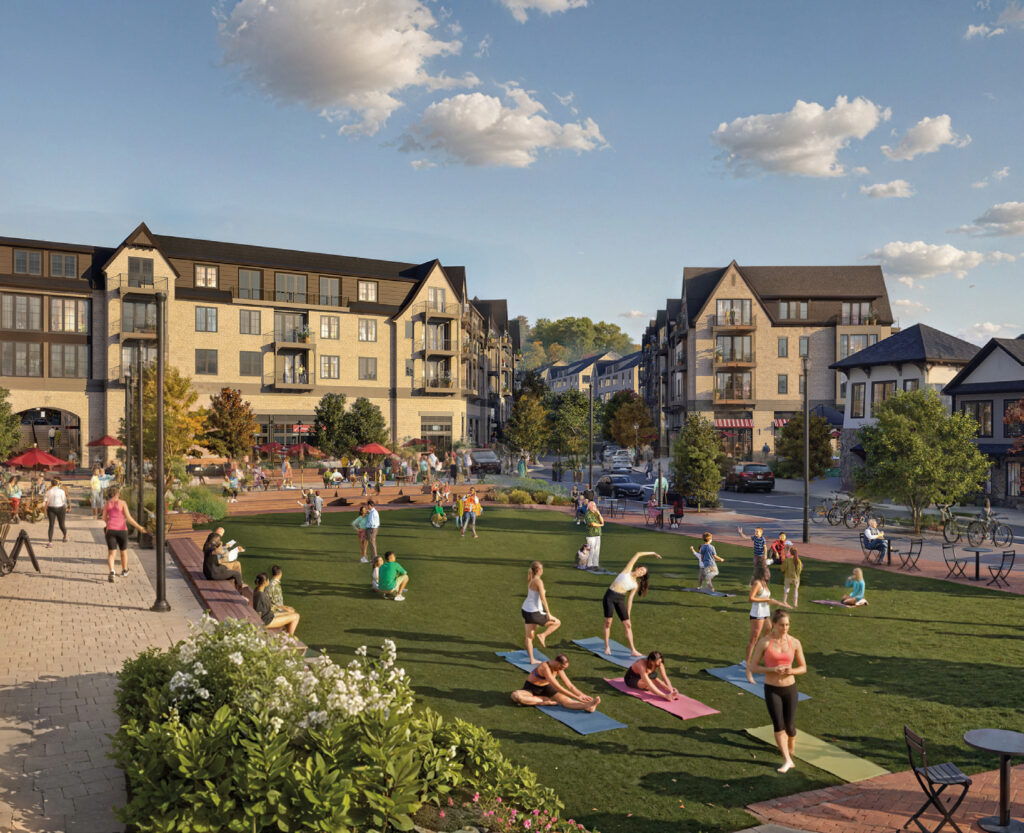
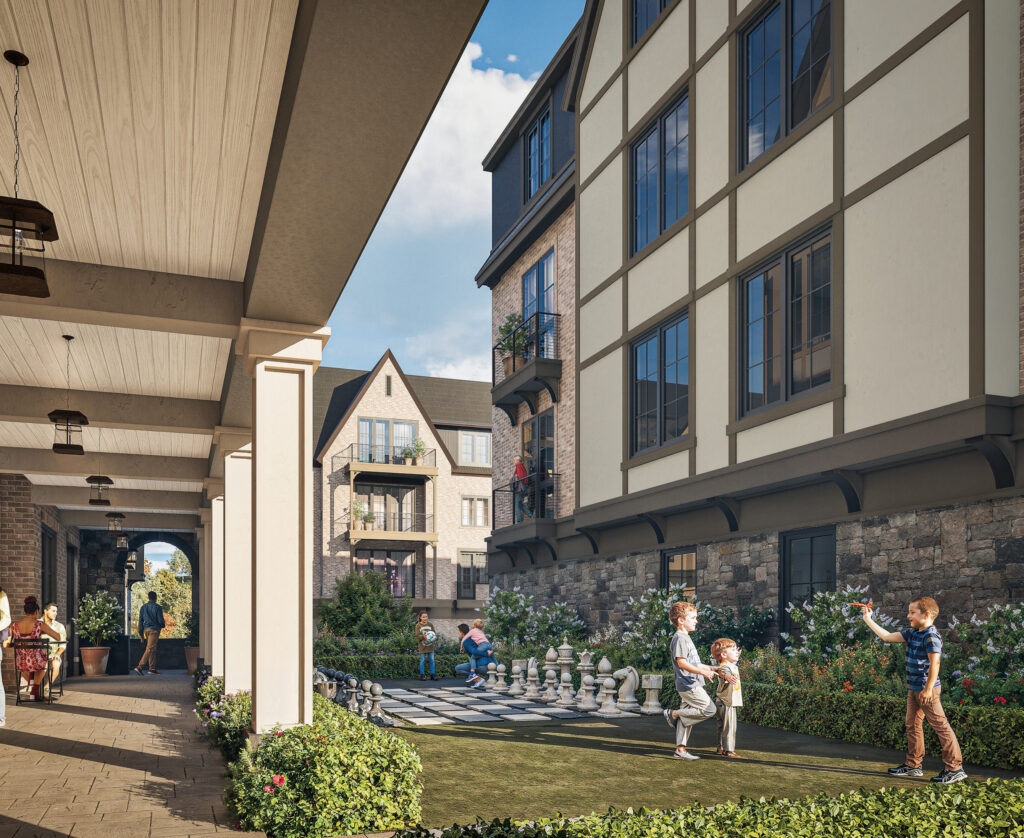
Beyond giving people somewhere to shop and socialize, it also gives them reasons to return. A haircut, preschool drop-off, coffee before the train, provisions for the weekend, dinner after a day in the woods. Over time, these ordinary errands become the habits that make a place feel like home.
That is also the thinking behind the Village’s public programming. This fall brings outdoor movies, live music, markets, theater, family events, fitness and wellness programs, and seasonal festivals, with winter skating to come. Old towns inherit rituals. New communities have to create them.
The physical plan is organized around that possibility. Sidewalks, shops, homes, and gathering places are concentrated in a compact center, allowing residents to walk between them rather than getting into a car for every errand. A jitney connects the community to the Tuxedo train station and the Port Jervis Line, with Manhattan accessible by rail and transfer.
There are environmental benefits, too. The Village is designed without natural gas, with all-electric buildings and solar-powered streetlights. Clustering homes preserves more contiguous land than the old estate-lot scheme would have. But the most significant natural asset is the landscape itself. Harriman has 31 lakes and reservoirs, while Sterling Forest protects a watershed serving millions. There is hiking, paddling, cycling, fishing on the Ramapo, and enough forest to make a morning walk feel like an expedition.
After 40 years, Tuxedo Reserve has evolved from an effort to replicate a storied enclave into a place designed to be shared. The houses and shops are just the beginning. What makes a village are the things that happen between them: coffee with a neighbor, a familiar face at the market, and the annual events that people come to love.
At the groundbreaking, Elizabeth McElroy’s hope was to have more children in her school. It was a modest wish, but it captured something essential, which is the desire for a place to become more than somewhere you live and instead become somewhere you truly belong. The places we value most are the ones we share with other people.
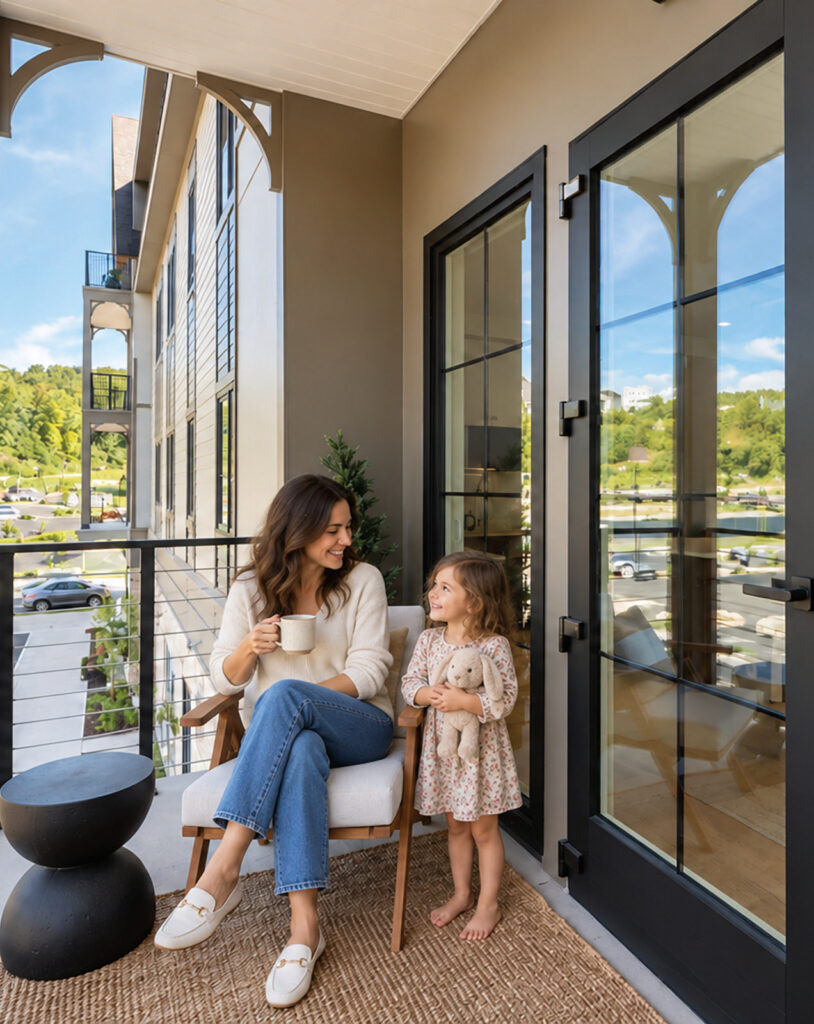
For most of its history, Tuxedo Reserve was a plan for a future that never quite arrived. Now the houses are being built, the Village is coming to life, and the future has become a Friday-night movie, music on the green, dinner after a day in the woods, and children discovering new faces in their tiny school.