Long before tuxedo meant black tie, champagne, and a certain effortless elegance, it was the name of a wild place in New York’s Ramapo Mountains.
The word itself reaches back to the Lenape, the Indigenous people who inhabited the region for centuries before European settlement. Its precise translation has been debated, serving as a fittingly elusive beginning for a place that would later cultivate an air of mystery and exclusivity.
Early versions of the name include Tucseto and the phonetic tuck-see-do. Traditional accounts have translated it as “place of the bear” or “clear flowing water,” while linguistic scholarship connects it to Lenape words meaning “round foot,” associated with the Wolf Clan, and tùkwsitu, “place of the Wolf-Clan people.” Another proposed source from Munsee Lenape suggests “crooked river” or “crooked water.” What is certain is that the name predates the grand houses, private clubs, and dinner jackets that would eventually make Tuxedo famous.
For much of its early history, Tuxedo was a rugged landscape of lakes, forests, and rocky ridges. Ironworks and forges appeared in the surrounding country during the 18th and 19th centuries, and a Revolutionary-era road passed through what would later become Tuxedo Park. In the early 19th century, the Lorillard family, whose fortune came from tobacco, acquired thousands of acres surrounding Tuxedo Lake. For decades, the property remained largely wilderness.
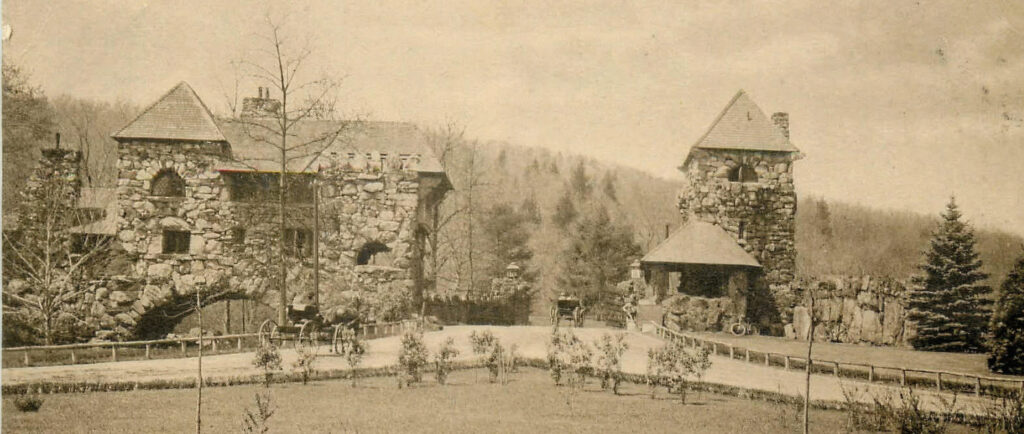
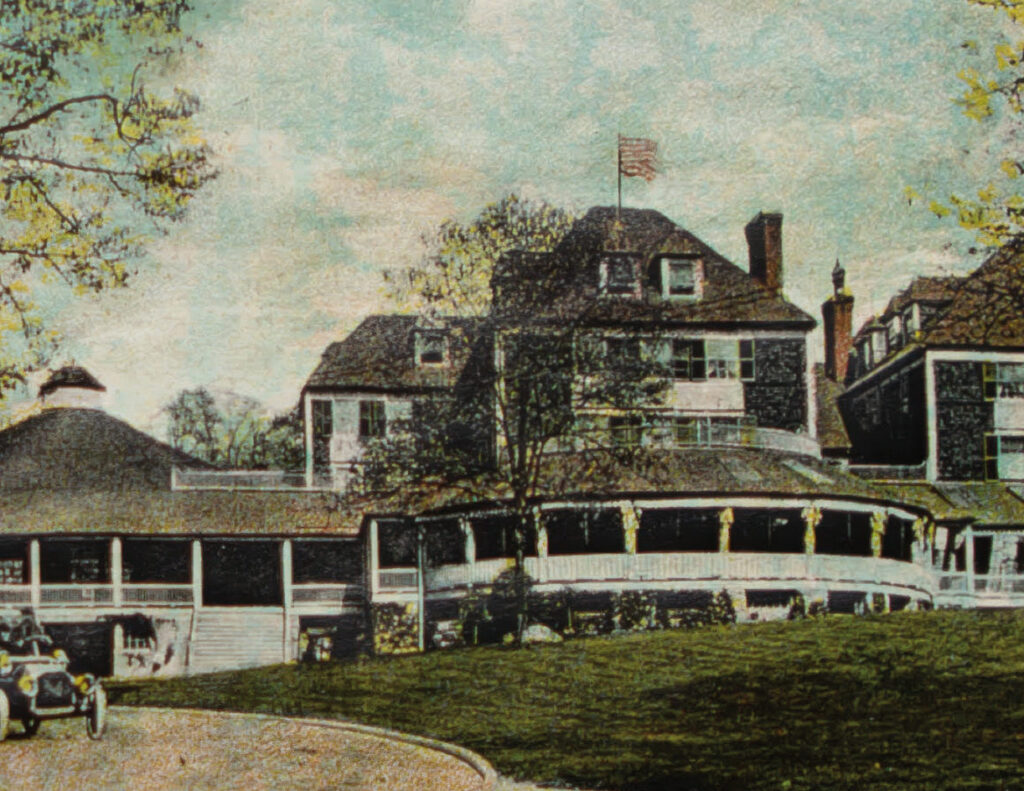
Then came Pierre Lorillard IV. In 1885, at the height of America’s Gilded Age, Lorillard envisioned a private sporting retreat where New York’s most prominent families could escape the city for hunting, fishing, and riding. There, they could enjoy society while remaining conveniently connected to Manhattan by rail. With architect Bruce Price, Lorillard set about transforming the forest surrounding Tuxedo Lake with astonishing speed. Some 1,800 workers, many of them Italian and Slovak immigrants, built roads, dams, water and sewer systems, a gatehouse, cottages, and an enormous clubhouse. In June of 1886, special trains carried hundreds of guests from New York City for the opening celebration. Tuxedo Park had arrived.
Behind its now famous stone gates emerged one of America’s earliest planned private communities, populated by names that read like a register of the Gilded Age. Astors, Morgans, and other leaders of American finance and industry joined a social world built around the newly formed Tuxedo Club. Even the Vanderbilts were among its members. Mansions and elaborate “cottages” appeared around the lakes, many designed by leading architects of the era. Within three decades, more than 250 houses and stables had been constructed in the Park and surrounding community. But Tuxedo’s most enduring contribution to American style may have begun with a trip to England.
THE MAKING OF A STYLE ICON
According to the account preserved by the Tuxedo Club, member James Brown Potter and his wife, Cora, visited the Prince of Wales, the future King Edward VII, at Sandringham in 1886. Potter asked what he should wear to dinner and learned that the Prince had begun favoring a short dinner jacket instead of the traditional swallow-tailed evening coat. Potter had one made in London and brought the idea home. His friends embraced the less cumbersome jacket for informal dinners at the Tuxedo Club.
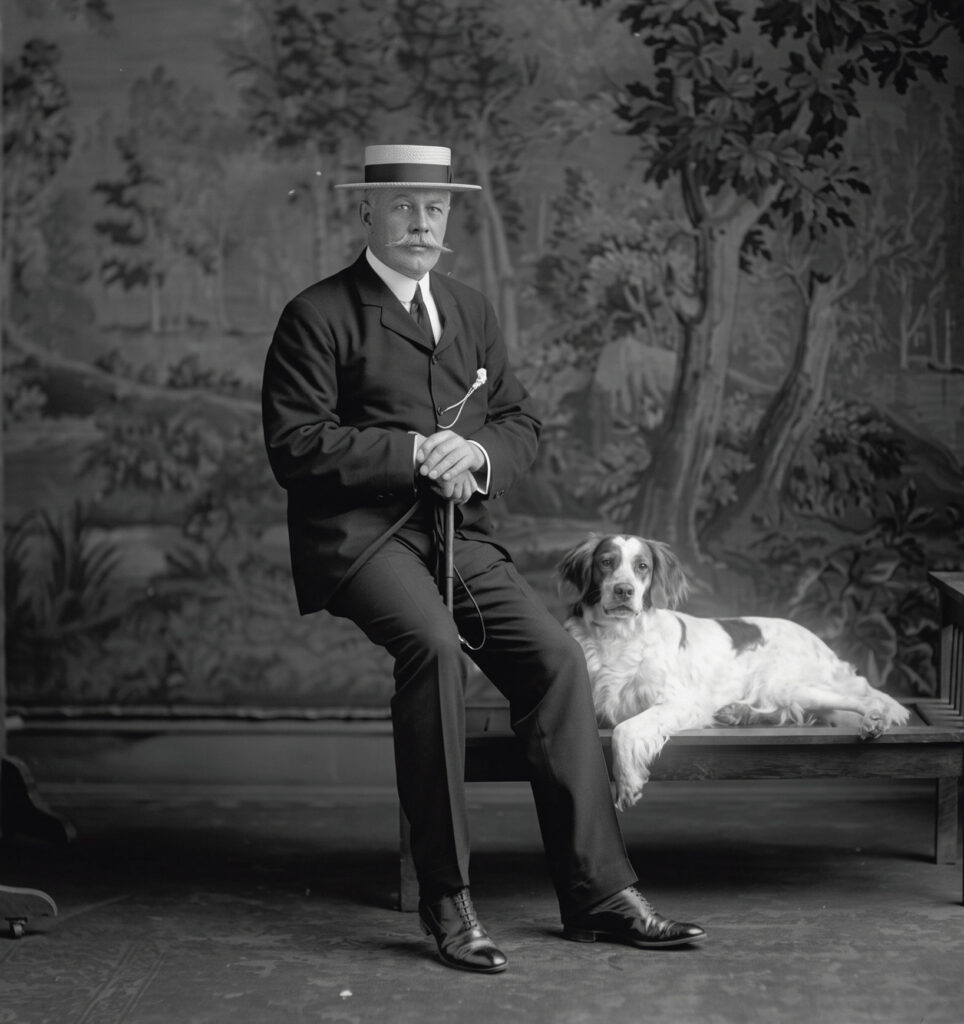
The details have acquired a layer of Gilded Age legend. Another famous, but less likely version of the story credits Lorillard’s son, Griswold, and his friends with appearing at the Club’s first Autumn Ball in October 1886 wearing abbreviated evening coats, startling the more conservative guests. Contemporary reporting confirms that unconventional tailless formalwear caused something of a sensation, although historians continue to debate precisely which event deserves credit for introducing the modern dinner jacket to America. Either way, the fashion became inseparable from the place.
When Tuxedo Club members began wearing their short dinner coats in New York City, the story goes, curious observers were told that this was simply what gentlemen wore at Tuxedo. By the late 1880s, the place-name had migrated from the Ramapo Mountains into the American fashion vocabulary. The dinner jacket had become the tuxedo.
It is an extraordinary linguistic journey: from an ancient Lenape place-name, to a lake in the Ramapo wilderness, to a Gilded Age enclave, to a club—and finally to perhaps the most internationally recognizable expression of masculine evening wear.
A NEW CHAPTER
Today, nearly a century and a half after Lorillard’s experiment in creating a new kind of country community, Tuxedo is once again in the midst of a transformation.
In 2026, the first residents began moving into Tuxedo Reserve, an ambitious new community unfolding across more than 1,200 acres between Harriman State Park and Sterling Forest. Developed by Lennar in partnership with Related Companies, the project will ultimately introduce more than 1,500 new homes to Tuxedo, while taking advantage of the extraordinary natural setting that has always defined this corner of the Hudson Valley.
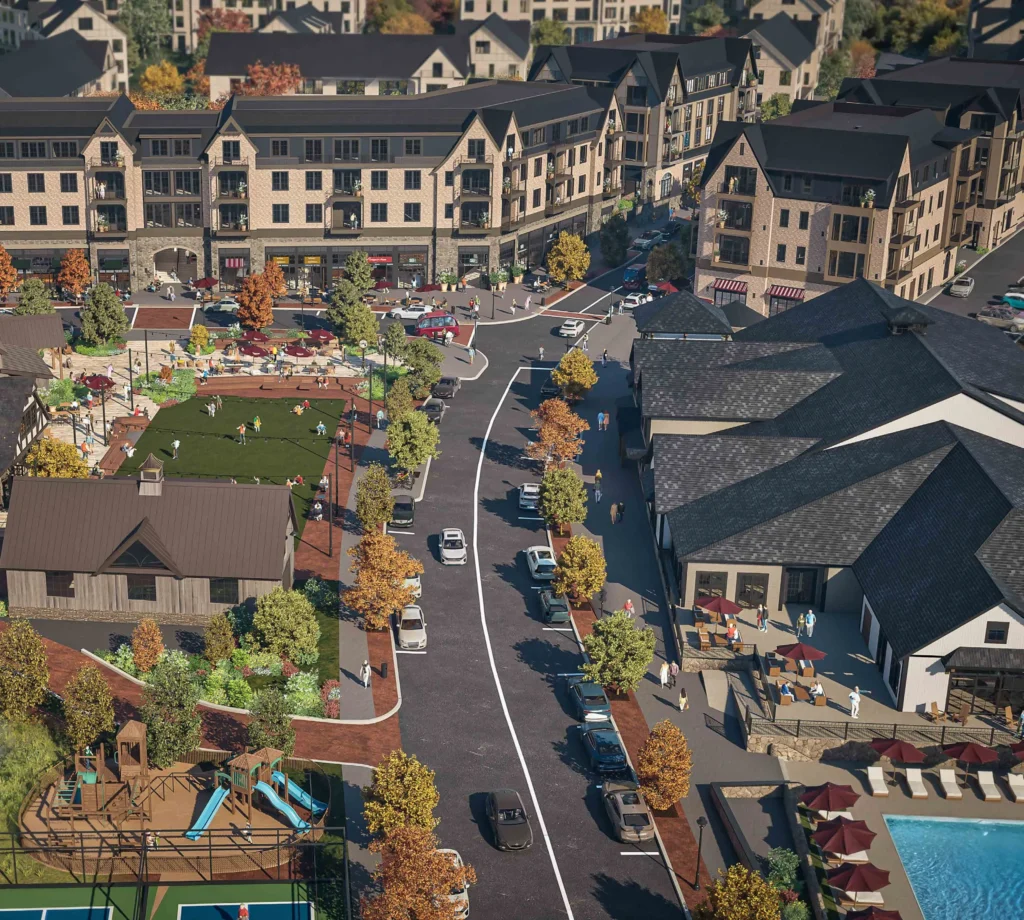
At its center is The Village at Tuxedo Reserve, a new walkable town center developed by Related Companies and opening in the fall of 2026. Inspired by the small towns and hamlets of the Hudson Valley, The Village will bring together residences, restaurants, shops, and bars with Market Square, a Village Green, seasonal ice skating, outdoor recreation, and a year-round calendar of cultural and community events.
There is a certain symmetry to it. In 1886, Tuxedo attracted New Yorkers northward and social life of the city set amid the area’s natural beauty and connected to Manhattan by train. Nearly a century and a half later, that same combination is helping shape Tuxedo’s next chapter.
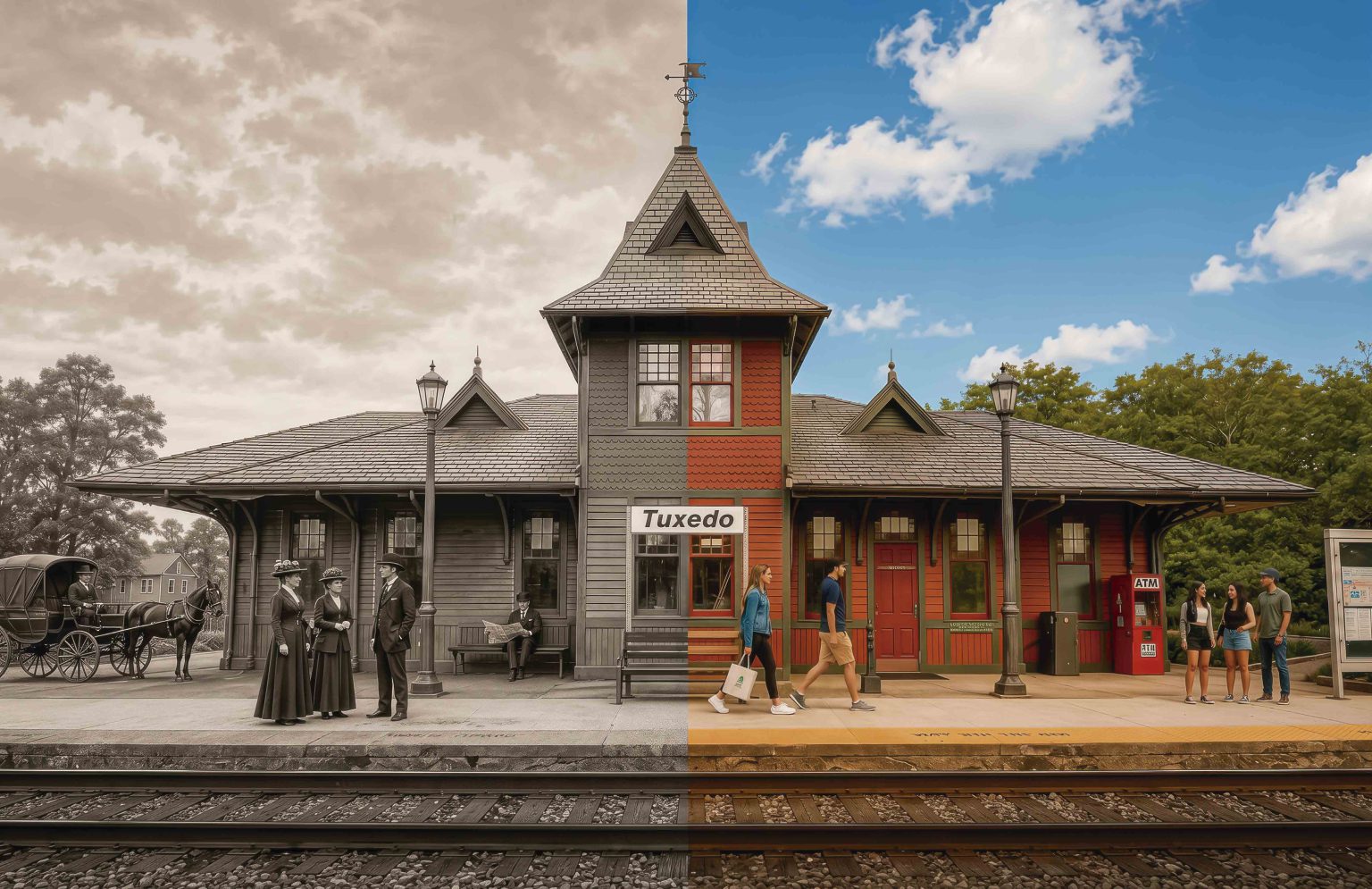
The stone gates of Tuxedo Park still stand. The historic train station still welcomes passengers.
The stone gates of Tuxedo Park still stand. The historic train station still welcomes passengers. The lakes, forests, and mountains remain. But around them, a new generation is arriving and a new community is taking shape. From the creation of Tuxedo Park in 1886 to the opening of The Village at Tuxedo Reserve in 2026, Tuxedo has always had a talent for reinvention.
This article was graciously fact checked by Alex Prizgintas, Town Historian for Tuxedo, NY